Mastering Inversions in 2027

Since our last post, we have been digesting a fresh federal budget. The hype has been extraordinary. Now we are all waiting to see what reality emerges. Have we seen a peak in property values? Will we go through an extended period of decline? Are our nascent entrepreneurs going to flee to capital gain-friendly havens? Will our society bloom in a new era of fairness and equity?

Much of this speculation is broadly about incentives and the shape of growth curves. A couple of years ago, we touched on growth in the context of our Development-themed conference. For 2027, we are focusing on that precise moment when we approach the asymptote, or plateau. If we go on to experience decline, this may be described as an inversion where growth parameters change from positive to negative.

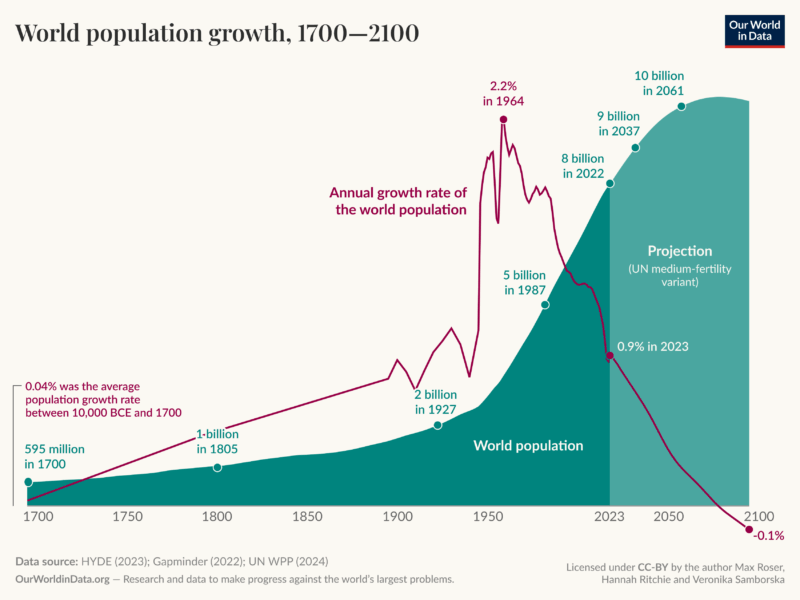
These periods are crucial, and we can think of many domains where we may be approaching an inflection point. In some areas, we may have already flown past them. Topical ones that come to mind are artificial intelligence versus human intelligence (note to self: use AI to check this post); growth in renewable energy versus fossil fuel energy; and world population growth. Below is a chart of world population growth rates showing a peak in growth occurring around the time when many other APE delegates came into the light. Looking past the growth rate in the curve, we see that we still have a couple of billion extra people to accommodate through to the end of the century. Maybe don’t expect the housing crisis to end just yet.

For more opportunities to think about inversions, or to give a presentation on inversions from your own perspective, register for APE 2027.  The end of the financial year is nigh!
 

Register for APE 2027 and support Canada

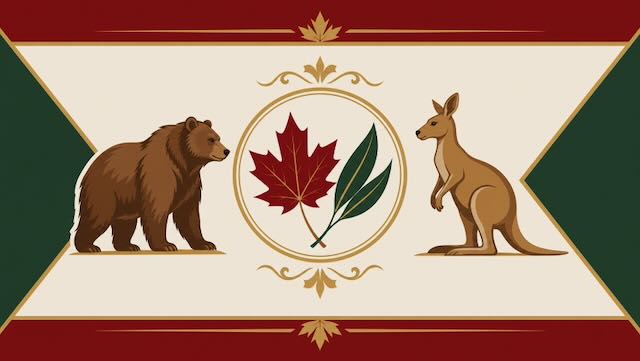
There have been calls, notably from Tod Maffin, for Australia and Canada to merge. What a great idea! We’ve all heard that Canadians are essentially cold Australians.  We are both middle powers with a shared colonial history. We can sort out flags and stuff later* but I think a maple-gum leaf combo would be great. I’m also a bit tired of “Oi Oi Oi” and maybe we could have more “Oh Oh Oh” (as in “Oh Canada…”) or “Eh Eh Eh”.

Seriously, I’ve just read Mark Carney’s book, Values. We could use his statesmanship and economic nous in the Southern hemisphere.  A combined Australia Canada would give us more soft power and a lot more soft powder!

To see if this idea has legs, I suggest you register for APE 2027 and embrace the theme of Inversion.

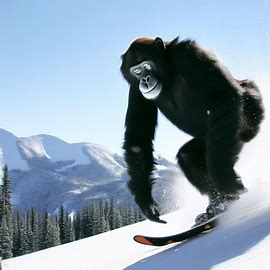
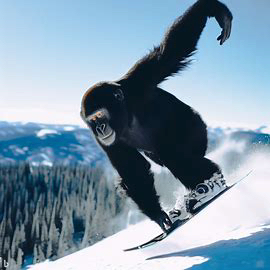
*A couple of tacky flag suggestions provided by AI shown below.

APE 2026 – Embracing Chaos

Sometimes we wonder whether anything makes sense: we even questioned whether we should run APE in 2026! But in the end we need to control what we can control and that means taking a moment to look at the big picture. With this in mind we are going ahead with APE in January 2026. We want to make sure we can be calm and resolute as others thrash around in a mire of egos and distractions. Join us in Silver Star from January 12-15!

(image produced courtesy Dall-E 3)


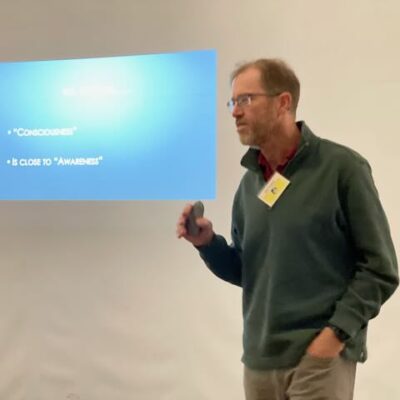
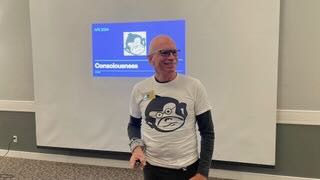
Consciousness … over

Debate may continue to rage about the existence and nature of consciousness among philosophers, neuroscientists and others ( see the latest from Nature here), but we are done with the topic. We’re already looking forward to APE 2025 with conference dates set for January 13-16.

End of the year is nigh!
The approach of 30 June means two things:

1. It’s never been a better time to register for the next APE conference

2. Season passes at SilverStar are at their lowest rate before this date.

The approaching cold weather system currently hitting South Eastern Australia is another little reminder of the Canadian winter around the corner.


Summary proceedings 2023 Available now!

To quote a number of 2023 participants “What a great conference!”. For a bit of a flavour, check out the summary proceedings here.

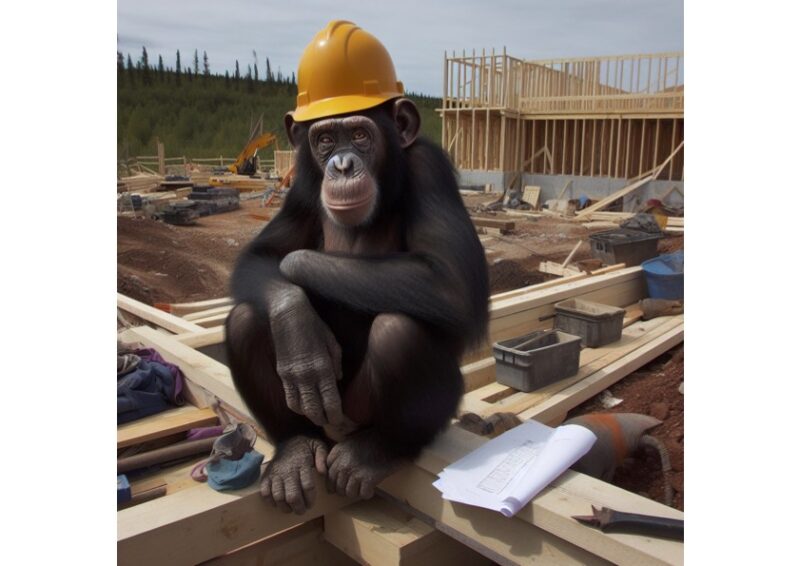
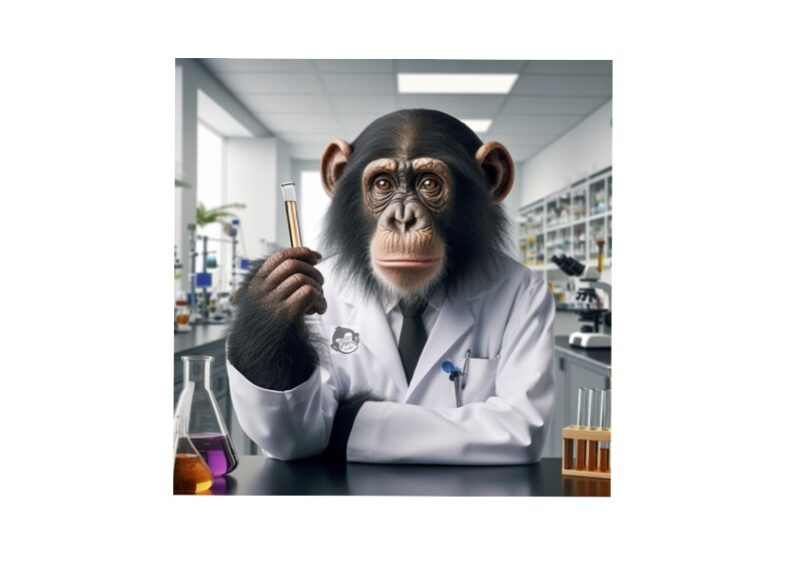
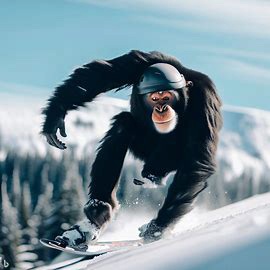
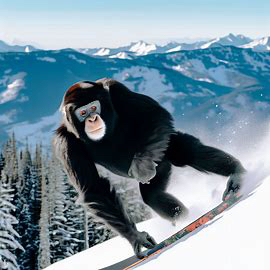
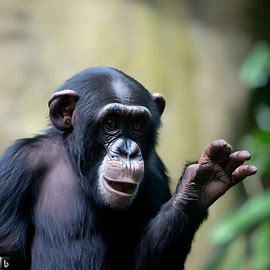
One of the big discussion points was the use of AI. ChatGPT had just started to gain attention when we ran the conference. Lately, we’ve been playing with the text to image AI within BING and it provided us with some pretty neat illustrations of what APE is all about. Enjoy! Let me know which one you think best captures APE!


APE Recovery Complete

January 9-14, 2022 saw the post COVID resurrection of APE conferencing. 

It was not without some cobwebs but the end result was an excellent conference with many fascinating presentations on the experiences of the last few years and speculations about the future. 

In the immediate future is the preparation of summary conference proceedings and then preparing for APE 2024. We expect the summary proceedings to be completed before the end of this quarter. Hopefully we’ll have flights booked by then as well!

During the conference final sessions we discussed dates for 2024. There was some support for shifting the dates a little later in the calendar. A suggestion was made that we aim for 15-19 January and the SilverStar conference rooms have been held for those dates. An alternative is to straddle the weekend with sessions on 11, 12 and 15, 16 of January. Looking forward to your feedback!

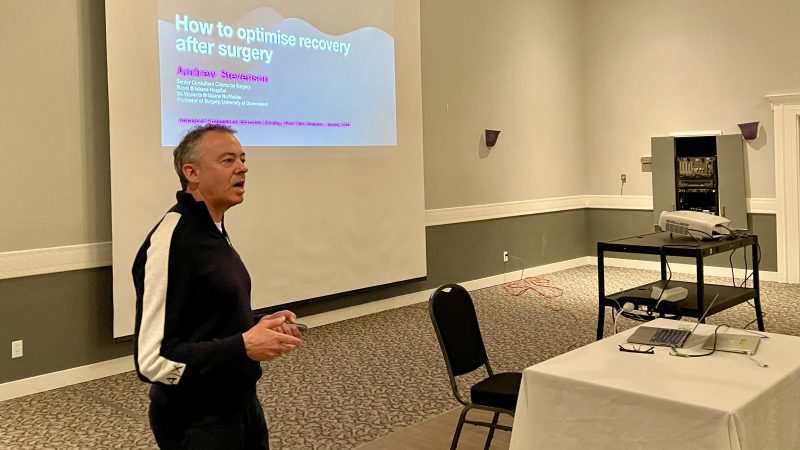
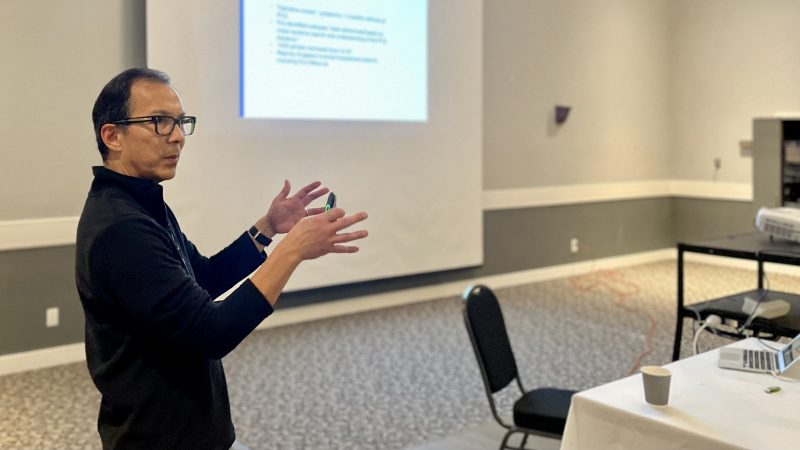
Profs Stevenson and De Souza presenting at APE 2023

APE and Avo’s

As announced, the theme for the 2023 conference is “Après Recovery”. It’s nice to think that this will reflect a post-pandemic world, even as infection rates currently remain high. We seem to have moved to a new worry – inflation*. Apparently avocados are one of the few grocery items we can buy now without feeling inflation’s suck. This is great news for us avowed avo’ lovers.

The avocado might also have some lessons for us in predicting change. Just the other day, Millennials were being excoriated for their inability to do without the luxury of an avocado on toast. Now picking up a few avo’s at Coles or Woolies is the epitome of good housekeeping. Of course the other half of this turnaround is the avo’ entrepreneur. She invested on the basis of hipsters’ insatiable demand. The trees she planted are now bearing fruit but everyone else’s are too.

Could the same thing happen to the monetary value of our professional services? Medical specialists have always seemed able to limit new entrants. But this may no longer be the case. Some other professions have been doing a lot of planting… School leavers of the last decade may be charging into the roles that offered income and lifestyle five or ten years ago. Are they right to do so? What will it mean for established professionals?

HAASta la vista!

*A reminder: APE registration is unaffected by inflation during the early bird period. Also, inflation can be largely ignored once you get to SilverStar. High fuel costs can be ignored – there’s no need to go anywhere that doesn’t involve a simple slide on perfect snow, or a walk down the stairs to the Chilcoot conference room. There in the Chilcoot, you will be able to crack a few cookies and engage in some deep thought and discussion about the future shape of your professional life. For more peace-of-mind, you could ride chairlifts largely powered by BC’s green hydro power.

Inflating APE

Sadly, the convenors of APE are old enough to have lived through many types of inflation including the dreaded stagflation. The 1980s, arguably our prime years, practically invented stagflation. Stagflation sounds kind of fun until you figure out that the “stag” bit did not refer to Triumph sports cars, deers with huge antlers or other memes for youthful lustiness. What stagflation did mean was significant unemployment and inflation, mitigated by punk music.

Back in the day, we got pretty good at gaming the stagflating economy by not having cash (easy at that age), delaying fixed payments for as long as possible and trying (but usually failing) to negotiate pay that would match the future declining value of a dollar.

Lots of pundits today are suggesting we are heading into a similar period. If they are right, we need to get our lives and businesses tuned to anticipate this. At APE we are moving proactively by:

  1. Opening registrations for 2023 now thereby allowing you to lock in rates before inflation takes hold, and in this financial year to accelerate any available deductions
  2. Offering early bird discounts to recognise that future payments will be of lesser value in real money terms than current payments
  3. Trying to lock in our costs, such as flights and venue hire, well ahead of January.

I’d encourage you to do the same. None of us want to be run over by raging stagflation…