Since our last post, we have been digesting a fresh federal budget. The hype has been extraordinary. Now we are all waiting to see what reality emerges. Have we seen a peak in property values? Will we go through an extended period of decline? Are our nascent entrepreneurs going to flee to capital gain-friendly havens? Will our society bloom in a new era of fairness and equity?
Much of this speculation is broadly about incentives and the shape of growth curves. A couple of years ago, we touched on growth in the context of our Development-themed conference. For 2027, we are focusing on that precise moment when we approach the asymptote, or plateau. If we go on to experience decline, this may be described as an inversion where growth parameters change from positive to negative.
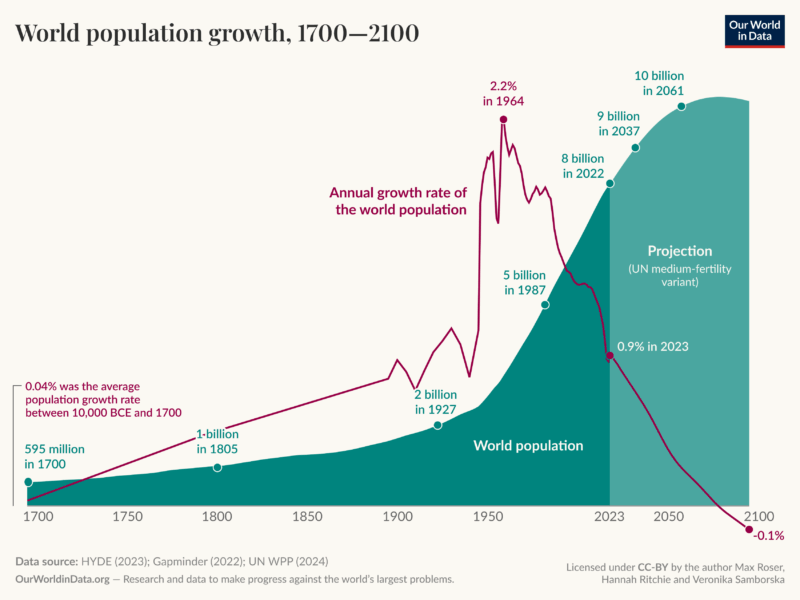
These periods are crucial, and we can think of many domains where we may be approaching an inflection point. In some areas, we may have already flown past them. Topical ones that come to mind are artificial intelligence versus human intelligence (note to self: use AI to check this post); growth in renewable energy versus fossil fuel energy; and world population growth. Below is a chart of world population growth rates showing a peak in growth occurring around the time when many other APE delegates came into the light. Looking past the growth rate in the curve, we see that we still have a couple of billion extra people to accommodate through to the end of the century. Maybe don’t expect the housing crisis to end just yet.
For more opportunities to think about inversions, or to give a presentation on inversions from your own perspective, register for APE 2027. The end of the financial year is nigh!